
Why Does My ADHD Medication Stop Working Before My Period?
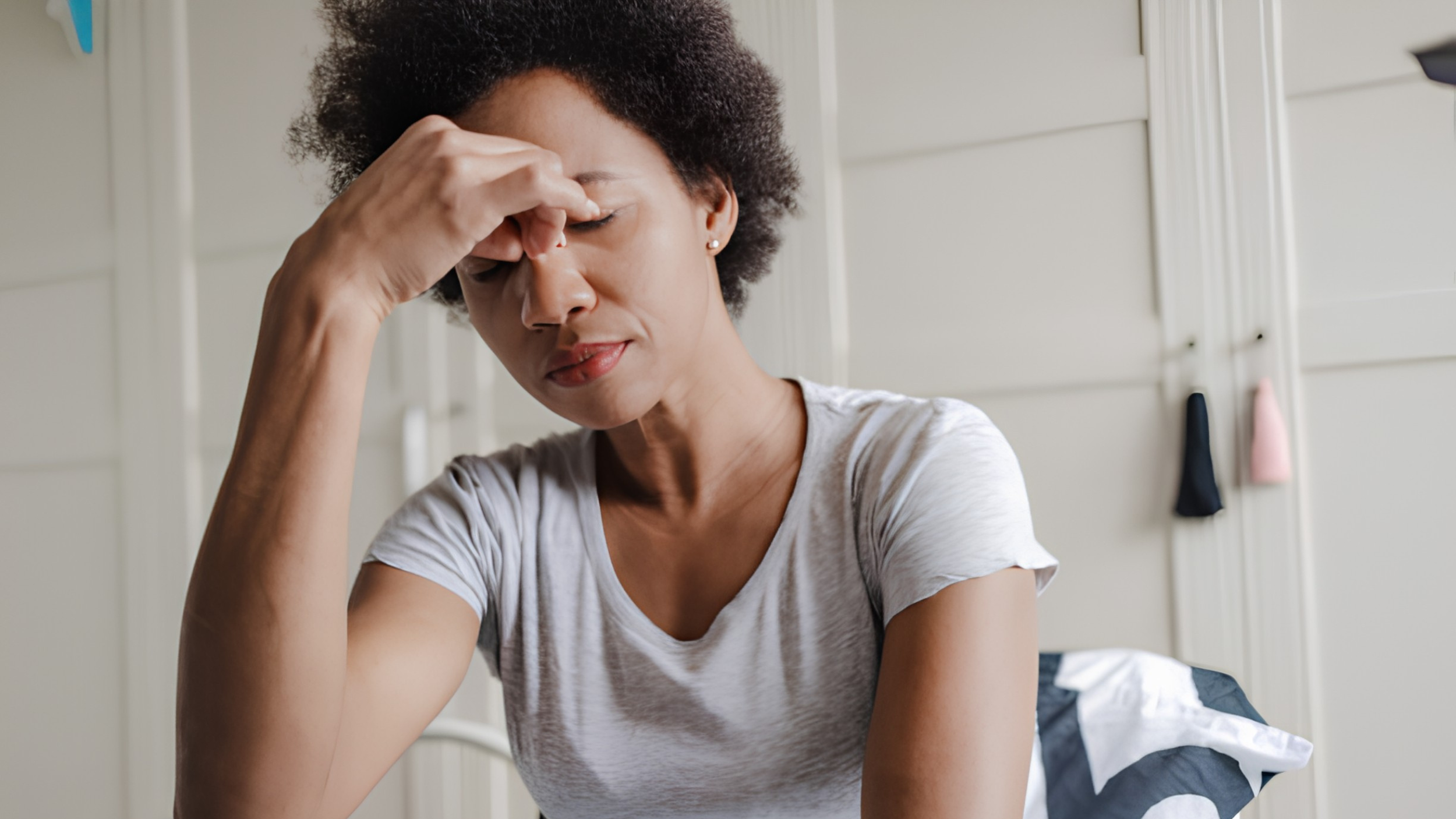
"Kelly, I swear my medication has stopped working."
Yesterday I was speaking with a client and she said something that I don’t hear that often, because most women never connect their menstrual cycle with ADHD.
But when I do hear it, I’m relieved because I know exactly where it is coming from.
She hadn't changed her medication.
She hadn't changed her dose.
She hadn't changed her routine.
But suddenly she was struggling to get out of bed, forgetting appointments, crying more easily, snapping at her children, struggling to focus and wondering whether she needed a higher dose.
Then I asked her one question.
"Where are you in your cycle?"
“Three days before my period” she answered, “why?”
The same pattern she'd been living through for years.
Nobody had ever explained to her that hormones can have a huge impact on ADHD symptoms.
Nobody had ever told her why some weeks she felt capable and on top of life and other weeks she felt like she was failing at everything.
So instead, she blamed herself.
Because that's what most women with ADHD do when they feel inconsistent.
They tell themselves…
You’re lazy, too emotional or not trying hard enough.
But the reality is often very different and has a biological explanation.
What many women don't realise is that estrogen plays an important role in how the brain uses dopamine.
And we know that dopamine (or low dopamine) is at the centre of ADHD symptoms.
As estrogen rises and falls throughout the month, many women notice changes in attention, motivation, emotional regulation, memory and even how effective their medication feels.
Suddenly, the mystery starts to make sense.
It's not that your ADHD disappears for two weeks and comes back for the next two.
And it isn’t that you are doing ADHD wrong.
Your brain is operating under different hormonal conditions throughout the month.
And nobody gave you the instruction manual to know why things feel so different from week to week.
Estrogen and Dopamine
ADHD is closely linked to dopamine, one of the brain's key neurotransmitters involved in attention, memory, motivation, emotional regulation, and executive functioning.
Estrogen helps support dopamine activity in the brain.
When estrogen levels are higher, many women find it easier to focus, stay organized, regulate emotions, and initiate tasks.
When estrogen levels fall, ADHD symptoms often become more noticeable.
This is particularly relevant during the second half of the menstrual cycle, just before menstruation begins.
Many women report:
Increased forgetfulness
Difficulty concentrating
More emotional reactivity
Greater overwhelm
Increased fatigue
More rejection sensitivity (RSD)
Feeling that their ADHD medication is no longer working
In reality, the medication’s effect hasn’t changed; it isn’t working better or worse day to day.
But the hormonal environment in which it is working has.
Why So Many Women Feel Overwhelmed
Here you are taking the same medication every day.
Eating the same breakfast.
Following the same routine.
Yet one week you can manage work, children, emails, laundry, and appointments.
The next week even simple tasks, like getting out of bed and taking a shower, feel impossible.
Many women assume this means they are lazy, inconsistent, undisciplined, or not trying hard enough.
But nothing could be further from the truth.
Your brain is operating under different hormonal conditions throughout the month and no one ever taught you what to expect.
Should ADHD Medication Be Adjusted During the Menstrual Cycle?
Some women find that their usual medication dose works well throughout most of the month but becomes less effective during the late luteal phase, the days leading up to menstruation.
Some clinicians may recommend temporary medication adjustments during this time.
Others may focus on sleep, nutrition, stress management, exercise, or symptom tracking as a first step in finding a solution.
There is no one-size-fits-all approach.
However, understanding the pattern is an important first step.
If you know your symptoms consistently worsen during a particular phase of your cycle, you can start having more informed conversations with your doctor.
Start Tracking your Cycle
One of the most useful things a woman with ADHD can do is track:
Menstrual cycle
ADHD symptoms
Emotional regulation
Medication effectiveness
Energy levels
Sleep quality
Patterns often become obvious within just a few months.
And instead of asking yourself, "Why am I struggling again?"
You will start to think, "Where am I in my cycle?"
Just knowing the right question to ask can change how you view yourself.
The Bottom Line
Many women spend years blaming themselves for symptoms that are being influenced by biology.
If your ADHD feels worse before your period, you're not imagining it, it likely is.
Your hormones may be affecting how your brain accesses and uses dopamine.
Understanding that connection won't solve everything but it may finally explain why some weeks feel so much harder than others.
For the Woman Who Wonders if She has Dementia
There is another group of women I worry about because often they are suffering in silence.
They're usually in their 40s and 50s and they've spent their whole lives coping.
Maybe they were never diagnosed, maybe they were but had forgotten about that childhood trip to the doctor and the 3 months of medication decades ago.
Either way, they have learned to manage.
They are educated, have built careers, raised children, run households and held the family together.
Then one day it feels like the wheels come off.
Suddenly, they can't remember conversations.
They walk into rooms and forget why they're there.
The laundry feels overwhelming.
The noise of family life feels unbearable.
They are crying more, snapping more and forgetting so much more…
And many of them become convinced they are losing their minds.
I can't tell you how many women I’ve spoken to who tell me
"Kelly, I feel like I'm getting dementia."
I’m yet to have a confirmed case, but many are entering perimenopause.
At exactly the same time that estrogen starts fluctuating, the ADHD symptoms they have spent decades masking suddenly become much harder to manage.
The systems they've relied on stop working and the effort required to get through the day doubles.
For some women, receiving an ADHD diagnosis in their 40s or 50s is one of the most relieving experiences of their lives.
Not because it changes who they are, but because they finally have an explanation for what has been happening.
Wondering If This Might Be You?
If you've noticed changes in your focus, memory, emotions, motivation, or the effectiveness of your ADHD medication, it may be worth paying attention.
You don't need to know whether it's ADHD, hormones, perimenopause, burnout, or a combination of all four.
Sometimes the first step is simply having a conversation with someone who understands both ADHD and the realities of being a woman.
If you'd like to talk, book a complimentary 15 minute ADHD Support Call.
We'll listen to what's going on and help you understand what your next step might be.