
Why Your Child With ADHD Can Do It When You're There, But Not When You Leave
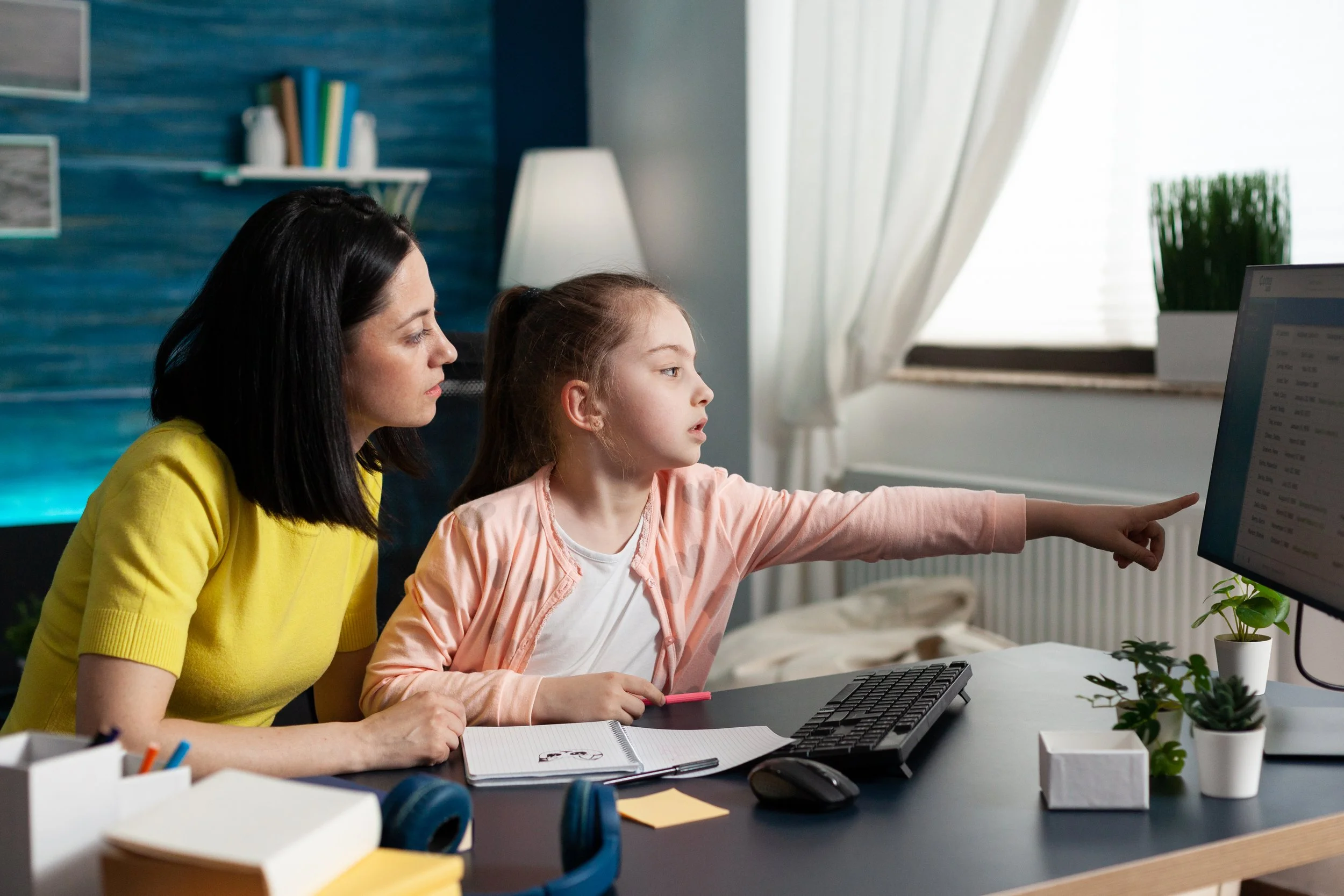
There is something that puzzles many parents of children with ADHD. Their child seems perfectly capable of completing a task when they're sitting beside them, yet the moment they leave the room, everything comes to a standstill.
Perhaps you've experienced this with homework. Your child has been sitting at the kitchen table for half an hour, barely making any progress. You sit down beside them, and suddenly they begin working. They know the answers, they understand the instructions, and within a few minutes, they're getting somewhere.
Relieved, you get up to prepare dinner. Ten minutes later, you return to discover that nothing else has been done.
It's frustrating, particularly when you've just watched your child demonstrate that they're perfectly capable of doing the work.
You might find yourself wondering why they can't simply get on with it. After all, you can't spend every afternoon sitting beside them. There are meals to prepare, laundry to do, emails to answer, and a hundred other things demanding your attention.
And beneath that frustration, there's often a genuine concern. How will my child ever become independent if they need me beside them to get anything done?
It's a reasonable question. But to answer it, we first need to understand what's happening.
The difference between knowing how and being able to follow through
When we think about independence, we tend to focus on whether a child knows how to complete a task.
Can they do their maths homework? Can they tidy their bedroom? Can they get dressed and pack their schoolbag without assistance?
If the answer is yes, we naturally expect them to be able to do those things on their own.
But for children with ADHD, knowing how to do something and being able to follow through independently are not necessarily the same thing.
Consider what happens when you ask your child to tidy their bedroom.
From your perspective, the task is straightforward. Dirty clothes go in the laundry basket, books go back on the shelf, and toys get put away.
But completing that task requires a whole series of mental processes. Your child needs to decide where to begin, organise the different steps, remember what they're supposed to be doing, resist distractions, and maintain their attention long enough to finish.
These are all aspects of executive functioning, an area where many children with ADHD experience difficulties.
Your child may understand perfectly well what a tidy bedroom looks like. What they struggle with is managing the process of getting from the messy room they're standing in to the tidy room you've asked for.
And when you leave them alone to get on with it, you're asking them to manage all those processes independently.
That's often where things fall apart.
Why having someone nearby can make such a difference
You may have noticed that your child's ability to concentrate changes when someone else is present, even when that person isn't actively helping.
Perhaps they complete their homework while you're working at the same table. Or they manage to tidy their room when you're sitting on the bed sorting laundry.
This is sometimes referred to as body doubling, an approach in which another person's presence helps someone stay engaged with a task.
The other person doesn't necessarily need to explain what to do, offer reminders, or monitor progress. Sometimes it's enough to be there, quietly getting on with something of their own.
For some people with ADHD, working alongside another person appears to make it easier to begin and maintain attention on activities that would otherwise be difficult to sustain.
Body doubling has become increasingly popular in the ADHD community, although scientific research specifically examining its effectiveness remains limited. It's better understood as a potentially useful support strategy than a proven solution that works for everyone.
What I find particularly interesting about this approach is that it challenges one of the assumptions parents often make about independence.
We tend to believe that if a child can complete something with us present, they should also be able to complete it without us.
But our presence may actually be part of what makes the task manageable.
Remove that support, and the demands of the task change.
What this might look like in your home
Imagine that your child regularly struggles to complete their homework.
Most afternoons follow a familiar pattern. You remind them to get started. They complain, delay, or become distracted. Eventually, you sit beside them to make sure the work gets done, but by that point you're both frustrated.
Tomorrow, rather than waiting for things to go wrong, you could try approaching the situation differently.
When it's time for homework, sit down at the table with something you need to do yourself.
You might say, "I've got a few things I need to catch up on. Why don't we sit here and do our work together?"
You don't need to make a big announcement about trying a new ADHD strategy. And there's no need to turn the afternoon into another lesson about responsibility.
Just work alongside each other.
If your child asks for help, offer it. If they become distracted, see whether they can return to the task without an immediate reminder. If they're struggling to get started, you might help them identify the first small step.
The important distinction is that you're providing a supportive environment without taking responsibility for every part of the task.
You may find that homework gets done with considerably less resistance. You may also discover that your child still needs help breaking the assignment into manageable steps, or that the task is too difficult, too long, or poorly timed.
Either way, you've learned something useful about what your child needs.
And perhaps, for once, homework doesn't have to become the most exhausting part of everyone's afternoon.
But aren't we supposed to be teaching our children to become independent?
Of course. Independence is an important part of growing up, and children with ADHD need opportunities to develop the skills that will allow them to manage their own responsibilities.
The question is how we help them get there.
Sometimes, in our understandable desire to encourage independence, we remove support before our children have developed the skills to manage without it.
We tell them they're old enough to do something themselves. We remind them that they managed it yesterday. We become increasingly frustrated when they continue to need our involvement.
And from the child's perspective, they keep hearing that they should be able to do something they genuinely find difficult.
Over time, this can become a painful pattern for everyone.
Parents feel as though they're constantly nagging. Children begin to feel criticised or incapable. Ordinary responsibilities become a source of tension, even when everyone wants the same outcome.
What if, instead of viewing support as something that prevents independence, we considered how it might help children develop it?
A child who struggles to complete homework independently might initially benefit from having a parent nearby. As they become more confident, you could experiment with stepping away for a few minutes, returning at an agreed time, or using a simple plan to help them keep track of what comes next.
Progress may not be linear. Your child might manage beautifully one afternoon and struggle the next, particularly if they're tired, overwhelmed, or having a difficult day.
That doesn't necessarily mean they're going backwards.
It means we're working with developing skills that can be affected by the demands of the situation.
And gradually, with the right support and opportunities to practise, many children can become more capable of managing these responsibilities themselves.
When helping becomes another source of conflict
There's an important difference between being available to support your child and feeling responsible for making sure they do everything.
Many parents find themselves caught somewhere between the two.
They begin by offering help, but when their child gets distracted, they remind them to focus. When the task isn't progressing, they start directing the next steps. When their child complains, they become frustrated.
Before long, what began as an attempt to help has turned into another argument.
If this sounds familiar, it's worth considering whether your child actually needs more reminders, or whether something about the task or the support you're providing needs to change.
Perhaps they need a clearer starting point. Perhaps they're overwhelmed by the number of things they're expected to do, or they need a break and a snack before they can concentrate.
And sometimes, what needs to change is the way we respond when things aren't happening as quickly as we'd like.
One of the most valuable shifts parents can make is moving away from the question, "Why won't my child just do what I've asked?" to “Why can’t my child do as I’ve asked?” and becoming curious about what is making it difficult for them to follow through.
That doesn't mean abandoning expectations or taking over their responsibilities.
It means recognising that a child can be willing to cooperate and still need support to succeed.
When everyday tasks become a daily struggle
If you find yourself constantly reminding your child to get started, stay focused, or finish what they've begun, you probably know how exhausting it can become. You want your child to become more independent, but you also don't want to spend every afternoon supervising homework or arguing about unfinished chores.
This is exactly the kind of challenge we work through in ADHD at Home, our six week live coaching programme for parents.
Starting November 2, 2026 we'll explore what's getting in the way of everyday routines and how you can support your child in developing the skills they need, while reducing the frustration and conflict that so often comes with it.
Because the goal isn't simply to get your child to finish their homework or tidy their bedroom. It's to help your family find ways of doing everyday life together that work better for everyone.